Unavoidably Unsafe and Effectiveness Unproven
No Basis to Justify Vaccine Mandates
Commentary by a 49-year Career Pediatrician
Disclaimer
The following observations and comments are offered solely for the purpose of facilitating informed consent for those dealing with decisions relating to choosing to take, or not to take, vaccines or other biological products. Any such decisions should be made only with the aid of one's own medical professional's advice. Nothing herein should be construed as medical advice.
Efficacy and Effectiveness
Relative Risk Reduction vs Absolute Risk Reduction
In presenting research data to the public on the effectiveness of vaccines, the prevailing word used is efficacy. In a practical sense as understood by nonmedical persons, this relates to the effectiveness of the products in question. In CDC and pharmaceutical company jargon, “efficacy” routinely relates to the statistical method of data presentation known as Relative Risk Reduction. There are two legitimate alternative methods for conveying data on effectiveness of vaccines in terms of risk reduction to the public – Absolute Risk Reduction (ARR) and Relative Risk Reduction (RRR). Although each is legitimate, it is important to use ARR as opposed to RRR when conveying data to individuals weighing the pros and cons of taking a vaccine as opposed to the impact upon the population at large. In other words, Informed Consent should present data, or at least include the data in ARR format – otherwise the individual will be misled. Understanding the difference between these two is critically important, as will become clear with the following.
A hypothetical data set illustrates this phenomenon:
Assume that 10,000 individuals receive a placebo injection (inert "dummy") and another 10,000 are given a dose of vaccine for CoVID-19 – and that the number of new infections with the SARS CoV-2 virus is determined over the next 4 months confirmed by a PCR test in both groups. Assume further that there are 100 cases of infection in the placebo group vs only 10 in the treatment group. The RRR would be 90%. The Absolute (ARR) reduction is 90 cases prevented among the 10,000 given the vaccine – which is 9 per thousand or 0.9 percent – less than one percent.
These hypothetical numbers are very close to the actual numbers from the Pfizer documents with their clinical trial data that were released to the public by court order after the FDA and Pfizer sought to delay release of the data for 75 years.[1] In a paper describing how Pfizer/BioNTech and Moderna presented their clinical trial data only in the relative risk reduction manner (RRR), Ronald Brown shows how selective reporting of vaccine efficacy measures in this fashion causes a type of reporting bias that misrepresents health information revealed to the public. He illustrates this powerfully in showing that for the Pfizer vaccine, relative risk reduction was 95.1%, but the corresponding absolute risk reduction was 0.7%. For the Moderna vaccine, RRR was 94.1% compared to ARR of only 1.1%.[2] This striking contrast can best be appreciated in graphical manner as shown in this paper. Notice that this is presented in a logarithmic scale, thereby minimizing the impact visually.
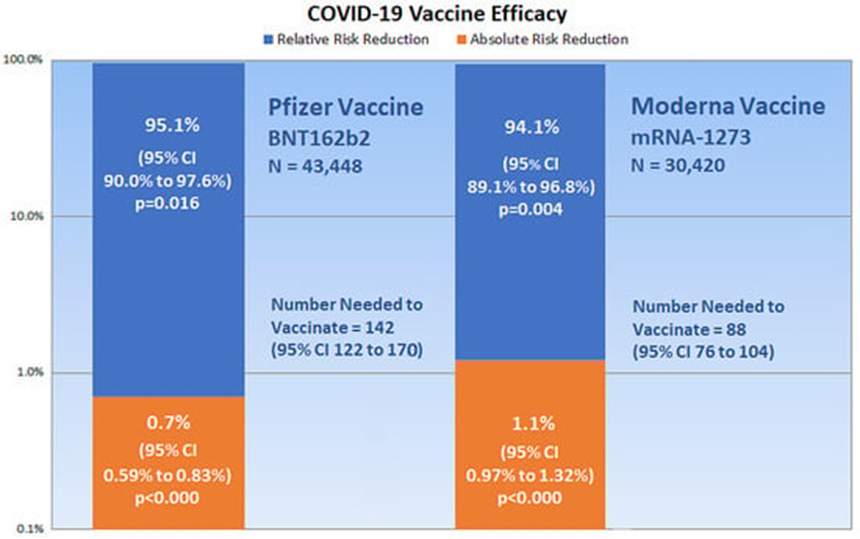
Thus, the reduction in risk of infection to the individual is in the practical sense negligible even when "efficacy" is 90 or 95 percent. It must be remembered that in this example, only 0.9 case of infection will be prevented from administering the vaccine to 100 individuals, all of whom are subjected to any risks from the shots, for a viral infection that during recent and current variant strains of the SARS-CoV-2 virus has a survival rate of 99.9997 percent with no treatment.[3] The risk of serious illness or death with no early treatment for recent and current SARS-CoV-2 variants is no greater than that of the common cold or seasonal influenza, and for the rare case of more serious illness, safe, effective ambulatory treatment is available through independent medical professionals across the country utilizing combination therapy with select pharmaceuticals such as ivermectin, antibiotics for secondary pneumonia, nebulized steroid budesonide, combined with zinc, quercetin, vitamins C and D, and other nutraceuticals.[4],[5]
Current CoVID-19 vaccines do not prevent infection or transmission
CoVID-19 vaccines were not preventing either infection of, or transmission from, vaccinated individuals according to statements by former CDC Director Rochelle Walensky in July and August of 2021, when then current strains were more pathogenic than those since.[6],[7]
Vaccinated vs Unvaccinated Comparisons
No vaccine on the regular recommended childhood vaccine schedule has been tested for safety or effectiveness compared to an INERT PLACEBO. For those skeptical, Turtles All The Way Down Vaccine Science and Myth (2022) by an author who chose to remain anonymous, provides a comprehensive analysis of each of the vaccines, with 447 hyperlinked references with brief introductory comments. Each of these sources can be accessed with a simple click on the hyperlink. The material in the book is referenced with a total of 1,240 sources in all. Despite the authors remaining anonymous in order to avoid distraction from the data and potential ad hominem attacks, the Editors are disclosed, and the Foreword is written by attorney Mary Holland. A number of prominent physicians and scientists endorse the book.
For the recommended childhood vaccines, no direct comparisons between vaccinated and unvaccinated groups of health outcome measures have been reported by government or public health agencies. In view of this fact, the usual public health or regulatory body message suggesting that doing such trials would be unethical because this would deprive the unvaccinated of the (unproven) benefit from vaccines rings hollow. The argument goes that to give a control group a placebo instead of a vaccine would deprive the placebo recipient of benefits conferred by the vaccine in question – but absent empirical data showing that to be true, the argument is invalid.
Over 100 such comparisons have been done by others, however, and are described in environmental attorney Robert F. Kennedy, Jr and Brian Hooker, PhD's 2023 book Vax-Unvax Let the Science Speak. They provide data and 764 source references for the studies and articles in peer-reviewed literature. The data consistently favor health outcomes for the unvaccinated across a wide array of outcome measures, with NONE favoring the vaccinated.
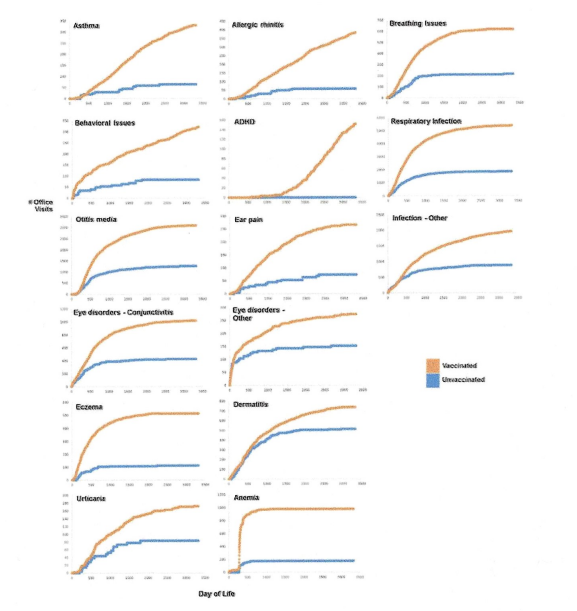
Pediatrician Paul Thomas’ published data from his integrative pediatric practice in Portland, Oregon is featured in chapter Two, showing that in every measure of 15 chronic health problems, unvaccinated children fared far better than their vaccinated peers. In no category of chronic illness did the unvaccinated population of his patients fare worse than the vaccinated. It is worth pointing out that Dr. Thomas had this analysis performed in response to the Oregon Medical Board directing him to produce evidence that his policy of allowing parents to choose which vaccines they would allow for their children, from none to the full CDC recommended schedule, did not pose risk of more harm for those declining to allow any or allowing only some of the recommended vaccines. Despite publishing the data, his license was suspended anyway.
Here is a screenshot of Dr. Thomas’ Feb 2019 QA data set created in response to the Oregon Medical Board’s request for proof that his Vaccine Friendly Plan policy for vaccine informed consent was as safe as the CDC recommended schedule, as published.[8] One can see that the unvaccinated consistently had a substantially lower number of office visits for every one of the 15 common pediatric clinical problems analyzed. The article in the International Journal of Environmental Research and Public Health in which the data was published on November 22, 2020 was retracted, modified, and then retracted again. It is still available in its retracted form, however, and it appears that this action was taken more for the purpose of suppressing awareness of the data Thomas produced than for any demonstrated harm to his patients or legitimate flaws in the paper warranting retraction.
In light of the foregoing, effectiveness is not supported from the limited data comparing vaccinated with unvaccinated populations – in fact the available data suggests that the net impact of pediatric vaccines is negative.
What About Smallpox, Measles, Whooping Cough, and Polio Vaccines?
When confronted with data challenging the long-held narratives claiming that “vaccines have saved untold millions of lives” and that they are “among the greatest triumphs in the history of medicine”, vaccine advocates bring up “ . . . what about vaccines that conquered smallpox, polio, whooping cough, and measles?”
That is a very good question and one that deserves careful analysis. A brief discussion of the answer follows below, but the interested reader is referred to an encyclopedic book Dissolving Illusions by Suzanne Humphries, MD and Roman Bystrianyk, (2014 and a 2024 Update). There one will find an exhaustive, rigorous analysis of data from mostly government and CDC sources showing that in most cases mortality from the respective diseases decreased precipitously prior to the implementation of the respective vaccines, from improved sanitation and other non-vaccine factors, along with various serious adverse event consequences of the vaccines as rolled out, including large numbers of deaths.
A recent communication from researcher and co-author Roman Bystrianyk illustrates this powerfully with pre- and post-vaccine roll-out data for measles and whooping cough.[9] The story behind polio and smallpox vaccines is more complex and requires more discussion and detail than feasible in this summary – thus the referral to a thorough discussion in the aforementioned books.
In a revealing acknowledgement, Dr. Anthony Fauci, along with co-authors Morens and Taubenberger commented in Cell Host and Microbe (Jan 11, 2023) that
“It is not surprising that none of the predominantly mucosal respiratory viruses have ever been effectively controlled by vaccines.”[10]
Measles Vaccine
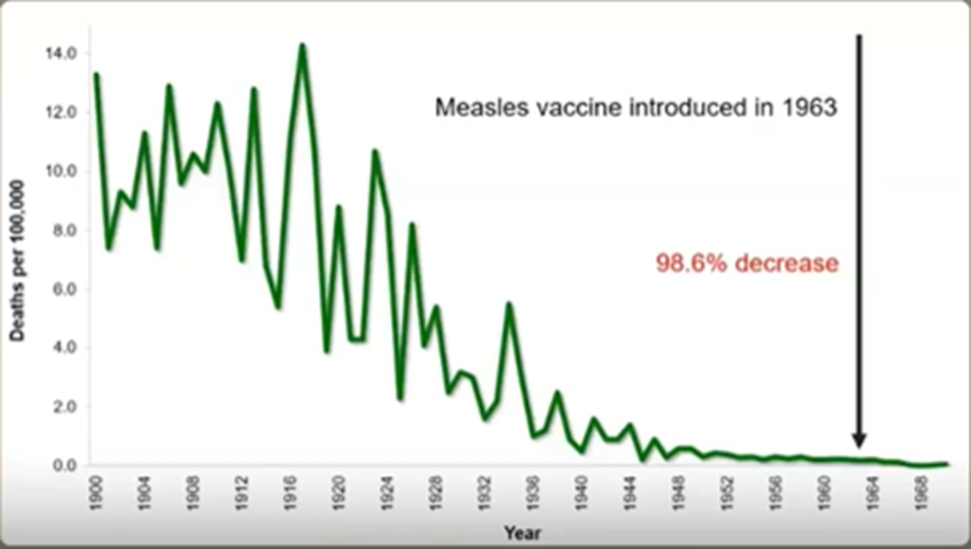
Select graphic data slides in the Bystrianyk source are presented as published in the book and obtained from US Government and CDC websites. Below is one showing that mortality from measles in the U.S. had declined by 98.6 percent before the introduction of measles vaccine in 1963.
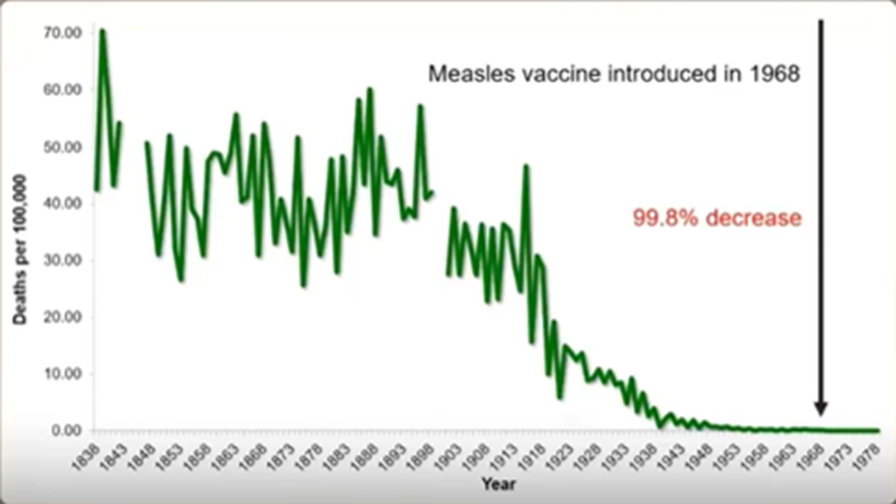
Data from the UK showed an even more dramatic pre-vaccine decline in mortality after a substantially higher rate of deaths per 100,000 population in the UK than in the US – a 99.8% decrease in mortality from a baseline high of 70 deaths per 100,000 in 1840 to implementation of measles vaccine in 1968.
Pertussis Vaccine
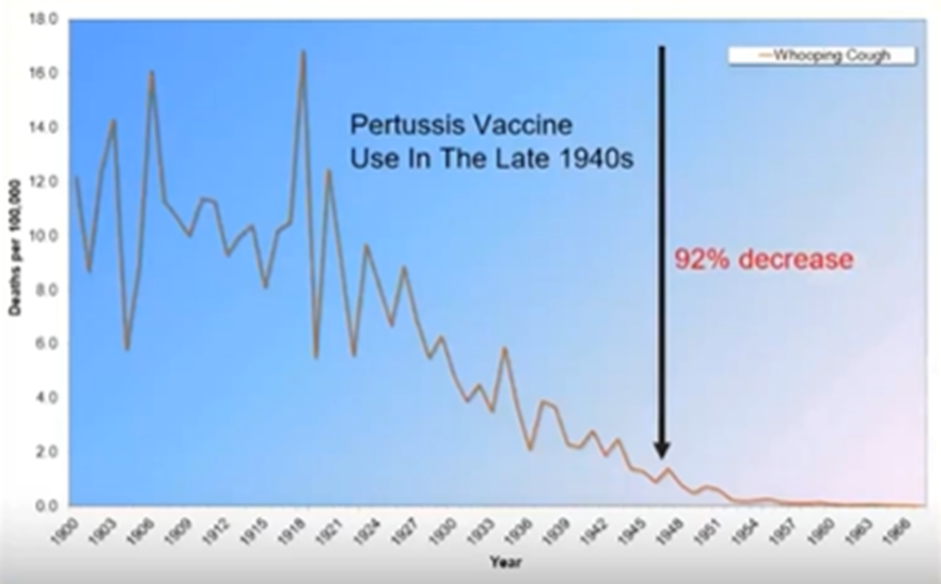
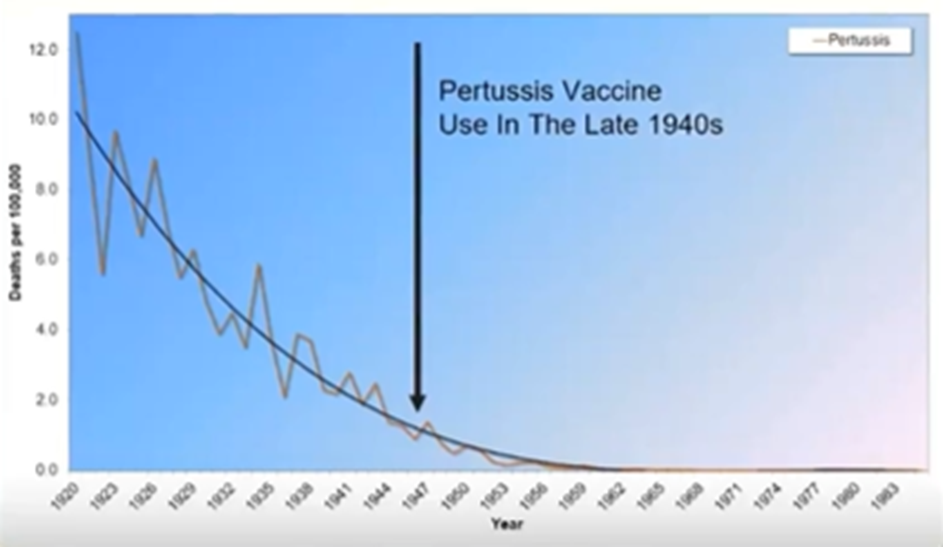
A closer look at the data for pertussis vaccine shows that the rate of decline in mortality did not change at all following implementation of the vaccine.
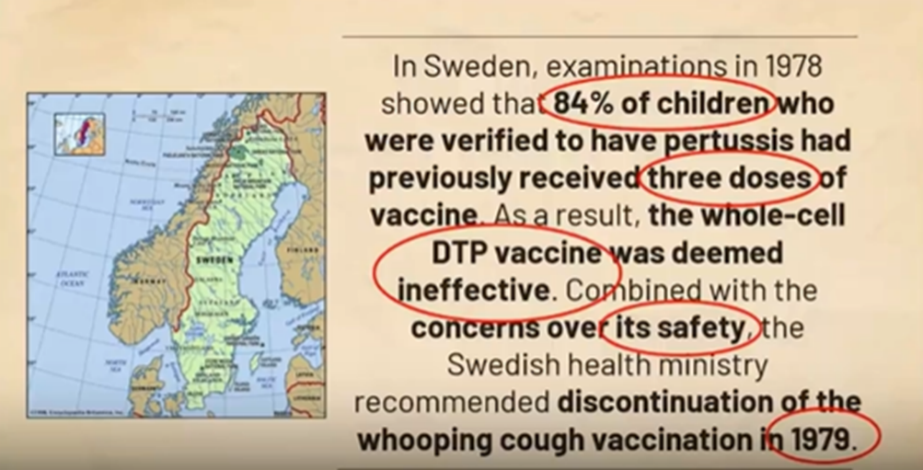
In 1978 Sweden deemed DPT vaccine ineffective after a study showed that 84% of children who were verified to have pertussis had received three doses of vaccine. Because of concerns over its safety, whooping cough vaccination was discontinued in 1979.
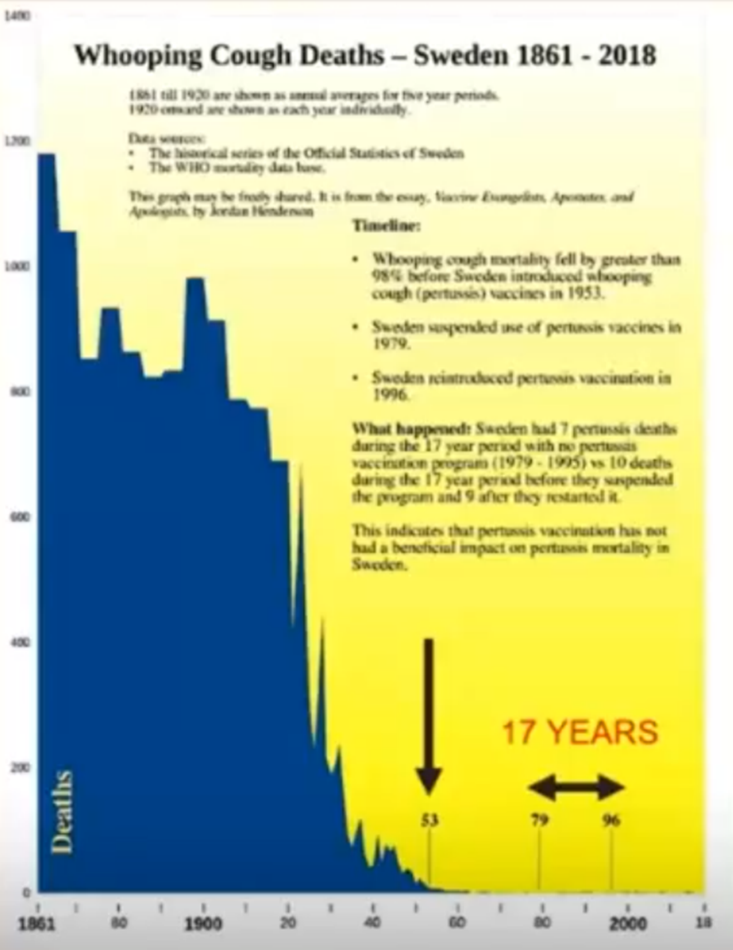
As it is apparent from the following slide, whooping cough deaths in Sweden between 1861 and 1963 fell precipitously from 1700 to 53 in the early 1950s pre-vaccine, then remained negligible for the 17 years following discontinuation of the vaccine. There were only 7 pertussis deaths during the vaccine-free 17 years vs 10 during the 17 years before the vaccine program was suspended – and then 9 after the vaccine program was re-started.
Following these slides, Bystrianyk shows graphic displays of precipitous declines in mortality from several other diseases for which vaccines were never developed, similar in magnitude to those that occurred in these diseases for which vaccines were available
Simultaneous Administration of Multiple Vaccines
With regard to their normative use in which multiple vaccines are administered on the same day, and the total number rising inexorably from 4 in the late 1940s[11] to 20 in the current schedule[12] (June 27, 2024), no research data has been generated by vaccine promoters, including public health or CDC authorities, relating to this simultaneous multiple vaccine-containing schedule of administration. So, it is only fair to say that effectiveness is unproven with regard to the actual manner of routine vaccine administration to children with varying combinations and numbers of vaccines given on a single day.
Jablonowski and Hooker published a peer-reviewed paper in the International Journal of Vaccine theory, Practice, and Research on 19 June, 2024 evaluating 1,542,076 vaccine combinations administered to infants less than one year of age at the time vaccination, between July1, 1991 and May 31st, 2011 from the Florida Medicaid database.[13] Their systematic analysis of 7 cohorts looked for adverse outcomes associated with vaccine combinations and adverse trends based upon an increasing number of vaccines administered, limited to diagnoses made within 30-days of vaccination, excluding the day of vaccination, for respiratory, developmental, and suspected infectious disease diagnoses.
In a chart showing the average number of different diseases detected within 30 days after the day of vaccination among the three abovementioned categories of diagnosis, it can be seen that the average number of different diseases detected increases exponentially with every additional vaccine administered.
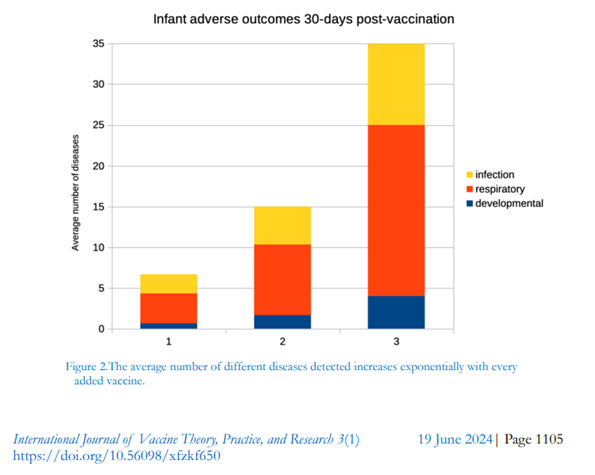
So, assurances from those insisting that the various combinations and numbers of vaccines administered on the same day are “safe and effective” notwithstanding, no study has been reported with data supporting that assurance, and now there is one suggesting otherwise.
Evidence of Harms from Vaccines
Over $5 billion has been paid out for vaccine damages including awards and attorneys’ fees/costs payments in the National Vaccine Injury Compensation Program’s "vaccine court" through May 1, 2024.[14] The post-marketing reporting database for adverse events following all vaccines created by the government (VAERS), was established in 1990.
The US Supreme Court in 2011 in BRUESEWITZ et al. v. WYETH LLC affirmed the liability shield for pharmaceutical company manufacturers and prescribing medical professionals established in the 1986 National Childhood Vaccine Injury Act (NCVIA), stipulating that vaccines are unavoidably unsafe.[15] This was the crux of the argument that vaccine manufacturers threatened to discontinue producing them if they were not given protection from liability for harm.
The total worldwide number of deaths following Covid vaccines alone reported to VAERS skyrocketed coinciding with the Covid mass vaccination campaign.[16] There were roughly 25,000 reported in 2021 alone and 37,814 in total through August 2, 2024.
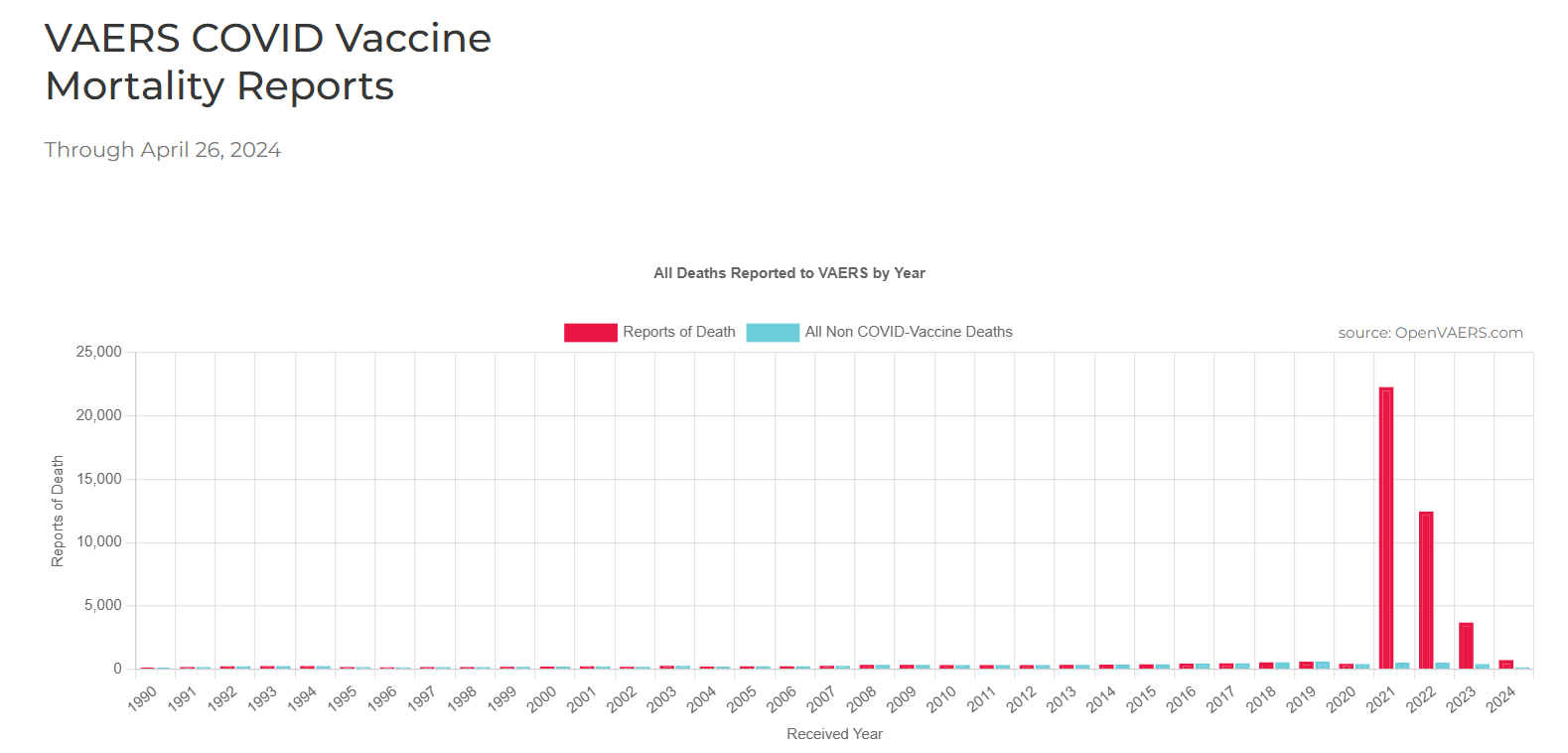
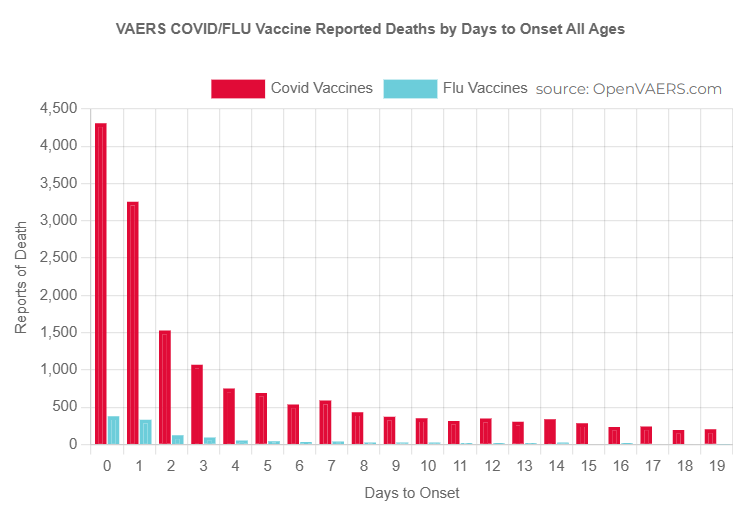
It is furthermore of great significance that marked clustering of larger numbers of such reported deaths closer in time to vaccine administration is obvious from the same source. This strongly supports a causal relationship between these deaths and the vaccines. Coincidental occurrences would be expected to show a random distribution relative to date of vaccination.
Another line of evidence supporting a causal relationship between post-vaccination deaths and the vaccines is a study by Hulscher and McCullough, et al presenting data from 28 autopsy cases where documented myocarditis was deemed likely caused by the COVID-19 vaccine by independent review of the clinical information, independent adjudication, and satisfaction of Bradford Hill criteria for causation.[17] The mean and median number of days between last COVID-19 vaccination and death were 6.2 and 3 days, respectively. Among the 28 cases, 57% were subclinical with few or no symptoms suggesting the myocarditis. The authors point out the close nexus of these cases with the widely observed sudden collapsing of previously healthy, relatively young individuals, many of whom were athletes. This phenomenon has become so frequent concurrent with the global COVID-19 vaccination campaign that a new term Sudden Adult Death Syndrome (SADS) has come into use.
Prior withdrawal of licensed vaccines from the market
Past withdrawals of vaccines from the market have been implemented following only a small fraction of the number of deaths reported following COVID-19 vaccines. In each case, causality was presumed.
- Swine flu vaccine 1976
- In 1976, 12 soldiers at Fort Dix, New Jersey were diagnosed with Swine flu, one of whom died. A pandemic possibility was declared and mass vaccination implemented. Within months, reports of Guillain-Barre syndrome and 53 deaths following these vaccines led to the permanent withdrawal of the vaccine.[18]
- Polio vaccine (Salk)
- The Salk vaccine was withdrawn from the market in less than a year from implementation after ten reported deaths.[19]
- Rotashield, a live, attenuated vaccine for rotavirus, was licensed on Aug 31, 1998 by the U.S. FDA. It was recommended for routine immunization of infants age two through six months of age by ACIP shortly after licensure, followed by the American Academy of Pediatrics. Post-marketing surveillance revealed by October, 1999, 101 confirmed and suspected cases of intussusception (invagination of bowel into itself with resulting obstruction) reported to VAERS, with 52 of the patients requiring surgery and one death. It was noted that clear clustering of cases from days 3 to 8 following vaccination was present. As a result of this signal, the ACIP withdrew its rotavirus recommendation, and the AAP also withdrew its recommendations. The vaccine was then withdrawn from the market by Wyeth-Lederly.[20] Here we see the FDA, AAP, and the vaccine manufacturer all acting to remove the product from the market after only one death.
Under-reporting or Over-reporting of Vaccine Injuries?
According to the Harvard Pilgrim study, fewer than 1% of vaccine adverse events are reported, and 1-13% of serious events are reported for drugs and vaccines combined.[21] Vaccine injuries of more serious or fatal nature may be reported at a somewhat higher percentage of occurrences. Some have calculated that for deaths, a multiplication factor of 30 rather than 100 would be reasonable. In this event, the total number may be in the neighborhood of 1,126,320.
Whether the actual number of these deaths is closer to the 35,000 or 1.126 million, the total number is astronomical – especially considering that in years past a new vaccine has been pulled off the market after numbers of deaths in the single digits to 40 or so.
Spokespersons for the CDC or other government agencies pushing these vaccines counter this argument for under-reporting with an invalid counter-argument. They posit that the VAERS system requires medical professionals to report injuries and that “anyone can report them.” This is true – but from whistle-blowers and rank-and-file primary care providers, it is known that very few medical professionals report an adverse event from a vaccine. There is great pressure from medical organizations and hospital systems not to file these reports. Remember, many have participated in mandating these shots for their employees, as well as participating in various forms of pressure – from allowing participation in bonus money tied to specified levels of organizational vaccine uptake to threatening jobs.
During my 31 years in private pediatric practice, I never knew of any medical professional reporting an adverse event following a vaccine or vaccines. During my final 6 ½ years of practicing Integrative Pediatrics, I was told by two medical professionals that when each of them attempted to report a vaccine injury they were told by the authorized VAERS report office that “we cannot accept this report” – and despite repeated attempts to ascertain the reason, no explanation was provided. One of these cases involved a child diagnosed with encephalopathy following vaccination diagnosed by a consulting neurologist as vaccine-caused injury, and the pediatrician trying to report it to VAERS was denied as described. The other case was a physician who had the same experience when attempting to report an injury to her own child.
A lawsuit against a New York hospital system, filed by physician assistant whistleblower Deborah Conrad, illustrates the pressures on the part of medical professionals not to report vaccine injuries, as well as hospital systems to resist doing likewise.[22] She filed the lawsuit in May, 2023 after being fired in October, 2021 for what the hospital claimed was “over-reporting” and “misinformation.” Her suit presents evidence that the hospital violated the requirement to report vaccine injuries under the federal FALSE CLAIMS Act, and that beyond failing to report cases, it blocked her from submitting approximately 170 reports of serious adverse events to VAERS between May 27 and Oct 6, 2021. Prior to her being fired, she was director of Advanced Practice Providers, sat on the medical executive board, and was the first non-physician to receive the Physician Excellence award.
Financial incentives in the form of bonuses for high patient population vaccine uptake and penalties for failing to reach organizational benchmarks are becoming commonplace now. Insurance companies are providing cash bonuses for health professionals who meet specified vaccine compliance benchmarks for their patients.
Below is a PDF file of Michigan Blue Cross Blue Shield’s 2017 physician incentive program that paid pediatricians $400 for each child with documentation of full compliance with recommended vaccines by age two years.[23]
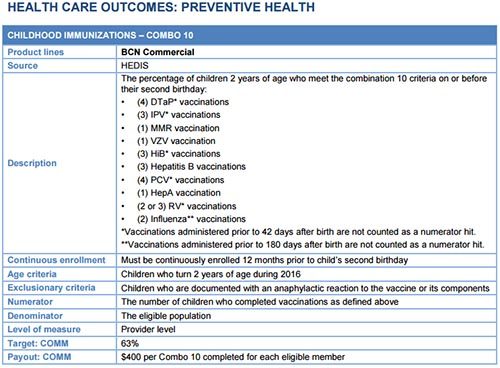
A Systematic Review In 2015 by the Harvard Medical School CDC Community Preventative Services Taskforce was conducted to evaluate the impact of incentive reward programs on vaccination in children and adults that included seven studies (four from the United States) over the search period: 1980–2012).[24] Their conclusion was that:
“These data suggest that even small incentives can be effective in increasing vaccination rates and the impact can be substantial when such incentives are provided as part of benefits within health plans.”
It is naive to believe that such financial incentives would not influence medical professionals to promote vaccinations among their patients, and research affirms that to be the case. In this context, it is obvious that this same policy would discourage reporting of adverse events occurring following vaccinations.
So, the evidence supporting substantial under-reporting is substantial, arguments to the contrary notwithstanding.
Liability Shield Removes Incentive for Safety
VAERS is the government vaccine injury post-marketing system designed to provide an early warning system for a signal for an unacceptable degree of risk from vaccines. It is important to know that liability for the vaccine company manufacturers and medical professionals administering them is waived for injuries caused by licensed vaccines on the childhood recommended schedule. This waiver of liability removes incentives for safety concerns, or for medical professionals to report injuries, as well as the large financial vested interest on the part of vaccine manufacturing companies and for medical professionals who administer mandated products for which they are protected from liability. One vaccine manufacturer alone, Pfizer, has since the year 2,000 been guilty of a total of $10,948,368,523 (almost $11 billion) in penalties stemming from 98 records.[25] These penalties were incurred for a variety of offenses itemized in the Good Jobs First violation tracker referenced.
It is sobering to realize that this is one of the two manufacturers for the vast majority of the mRNA Covid-19 vaccines world-wide.
Conclusions
The foregoing explains why pharmaceutical companies and those pushing the vaccines (CDC, FDA, hospital systems, medical organizations, etc.) with massive financial incentives tied to liability waver have lost credibility when continuing the false claim that vaccines are unqualified “safe and effective”. Research data has not proven the usual recommended childhood vaccination schedules to be effective, and there is overwhelming evidence that they are not safe, as an understatement. It is critical that data from comparisons between vaccinated and unvaccinated populations be performed and published by regulatory and government agencies, unaccompanied by financial or career vested interests. Otherwise, Informed Consent is impossible, growing "vaccine hesitancy", widely decried, is rational and appropriate, and increasing loss of credibility of and confidence in public health agencies and the CDC and FDA will continue. Even more so, vaccine mandates of any kind cannot be justified under any circumstance in the absence of such data.
Bose Ravenel, MD, FAAP, Retired
31 years private pediatric practice
11 years academic pediatrics
6 1/2 years integrative pediatrics practice
15 years studying vaccinology
Expert witness in Pennsylvania on Covid vaccines for adolescents
September 11, 2024
References
- Judge scraps 75-year FDA timeline to release Pfizer vaccine safety data, giving agency eight months. Kaelan Deese. Washington Examiner. Jan 7, 2022. https://www.washingtonexaminer.com/news/2381224/judge-scraps-75-year-fda-timeline-to-release-pfizer-vaccine-safety-data-giving-agency-eight-months. Accessed September 11, 2024, 2024.
- Outcome Reporting Bias in COVID-19 mRNA Vaccine Clinical Trials. Ronald B. Brown. Medicina 2021, 57(3), 199. https://www.mdpi.com/1648-9144/57/3/199. Accessed September 11, 2024.
- CDC COVID-19 Pandeic Planning Scenarios. Updated March 19, 2021. https://archive.cdc.gov/www_cdc_gov/coronavirus/2019-ncov/hcp/planning-scenarios.html. Accessed May 26, 2024.
- Pathophysiological Basis and Rationale for Early Outpatient Treatment of SARS-CoV-2 (COVID-19) Infection. Peter A. McCullough et al. The American Journal of Medicine, Aug 6, 2020.
- Multifaceted highly targeted sequential multidrug treatment of early ambulatory high-risk SARS-CoV-2 infection (COVID-19). McCullough PA, Alexander PE, Armstrong R, Arvinte C, et al. Rev. Cardiovasc. Med 2020, 21(4), 517-530; 30 December 2020.
- Statement from CDC Director Rochelle P. Walensky, MD, MPH on Today’s MMWR | CDC Archive July 30, 2021. https://www.theepochtimes.com/article/cdc-director-says-shes-really-struggling-with-how-to-communicate-about-covid-19-3945630. Accessed September 11, 2024.
- CDC Director Says She’s ‘Really Struggling With How to Communicate’ About COVID-19. Jack Phillips. The Epoch Times. August 12, 2021. https://archive.cdc.gov/#/details?url=https://www.cdc.gov/media/releases/2021/s0730-mmwr-covid-19.html.Accessed September 11, 2024.
- Relative Incidence of Office Visits and Cumulative Rates of Billed Diagnoses Along the Axis of Vaccination. James Lyons-Weiler and Paul Thomas. International Journal of Environmental Research and Public Health. 22 November 2020. (Retracted) https://www.ncbi.nlm.nih.gov/pmc/articles/PMC7709050. Accessed September 11, 2024.
- Roman Bystrianyk. https://x.com/SenseReceptor/status/1831086377376817357?fbclid=IwY2xjawFGszpleHRuA2FlbQIxMQABHR5Kq6oUB-rfaIF4yHfelEklRO9p01fJkPp1rtG5ullJfEfWhpCC8DttbA_aem_F2ZX_JQrrR24h4zrxvDrNg&sfnsn=mo. Accessed September 11, 2024.
- PANDA Uncut. Roman Bystrianyk Substack. https://pandauncut.substack.com/p/watch-dissolving-illusions-disease-112. Accessed September 11, 2024.
- Vaccine History: developments by Year. Children’s Hospital of Philadelphia. https://www.chop.edu/vaccine-education-center/science-history/vaccine-history/developments-by-year. Accessed September 11, 2024.
- Child and Adolescent Immunization Schedule by Age (Addendum updated June 27, 2024)Recommendations for Ages 18 Years or Younger, United States, 2024. CDC Vaccines & Immunizations.https://www.cdc.gov/vaccines/hcp/imz-schedules/child-adolescent-age.htmlAccessed September 11, 2024
- Adverse Outcomes Are Increased with Exposure to Added Combinations of Infant Vaccines. Karl Jablonowski, PhD and Brian Hooker, PhD. International Journal of Vaccine Theory, Practice, and Research. Vol 3(1). 19 June 2024. 1103-1111. https://doi.org/10.56098/xfzkf650. Accessed September 11, 2024.
- Data & Statistics. HRSA. National Vaccine Injury Compensation Program Monthly Statistics Report. May 1, 2024.https://www.hrsa.gov/sites/default/files/hrsa/vicp/vicp-stats-05-01-24.pdf. Accessed September 11, 2024.
- Bruesewitz v. Wyeth LLC, 562 U.S. 223 (2011). JUSTIA U.S. Supreme Court. Argued October 12, 2010-Decided February 22, 2011. https://supreme.justia.com/cases/federal/us/562/223. Accessed September 11, 2024.
- OpenVAERS. COVID VACCINE DATA. https://openvaers.com. Accessed September 11, 2024,
- Autopsy findings in cases of fatal COVID-19 vaccine-induced myocarditis. Nicolas Hulscher, Roger Hodkinson, William Makis, and Peter A. McCullough. ESC Heart Failure. 14 Jan.2024. https://onlinelibrary.wiley.com/doi/10.1002/ehf2.14680. Accessed September 11, 2024.
- The Medical-Pharmaceutical Killing Machine: Facing Facts Could Save Your Life. Children’s Health Defense. Skyhorse Publishing 2024. p. 83 (ref 58) https://worldcouncilforhealth.org/resources/covid-19-vaccine-pharmacovigilance-report.
- Ibid.
- Rotavirus vaccine withdrawal in the United States; The role of postmarketing surveillance. Gilles Delage. Canadian Journal of Infectious Disease. Jan-Feb 2000. pp 10-12. https://www.ncbi.nlm.nih.gov/pmc/articles/PMC2094741. Accessed September 11, 2024.
- Electronic Support for Public Health-Vaccine Adverse Event Reporting System (ESP: VAERS). Harvard Pilgrim Health Care, Inc. 2011. https://digital.ahrq.gov/sites/default/files/docs/publication/r18hs017045-lazarus-final-report-2011.pdf. Accessed September 11, 2024.
- Employee sues hospital that fired her for reporting COVID vaccine injuries to VAERS. Brenda Baletti, Ph.D. The Defender. May 22, 2024. https://childrenshealthdefense.org/defender/deborah-conrad-sues-hospital-fired-reporting-covid-vaccine-injuries-vaers. Accessed September 11, 2024.
- 2016 Performance Recognition Program. Health Care Outcomes: Preventive Health. No 16 of 32. https://mclaren.org/Uploads/Public/Documents/MPHO/documents/HealthPlan/2016-BCN-BCBSM-PRP-Booklet-Final-2015_12_18.pdf. Accessed September 11, 2024.
- Can Vaccine Incentive Reward Programs Increase COVID-19 Vaccine Uptake? Harvard Medical School Blavatnik Institute Global Health & Social Medicine. 2015.https://ghsm.hms.harvard.edu/sites/default/files/assets/Programs/PublicPolicy/Vaccine Incentives_PGPPSC.pdf. Accessed June 6, 2024.
- Violation Tracker Current Parent Company Summary. Pfizer. Good Jobs First. https://violationtracker.goodjobsfirst.org/parent/pfizer. Accessed September 11, 2024.